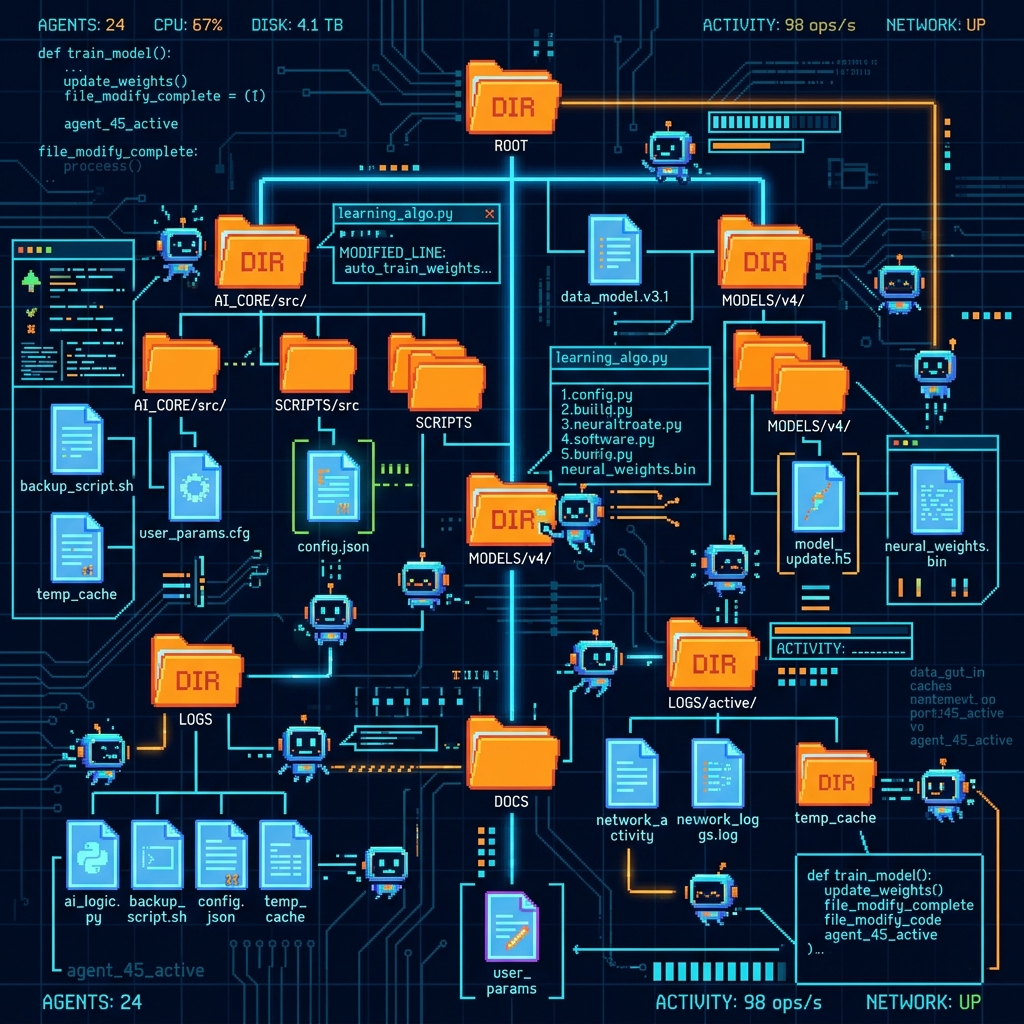
The landscape of AI-assisted engineering has undergone a massive paradigm shift in 2026. The era of passive chat interfaces is ending. Developers are embracing 'Agentic Workspaces'—autonomous environments where LLMs don't just recommend code, but directly modify files, execute terminal scripts, test builds, and inspect sandboxed live previews.
From Chatbots to Autonomous Co-Pilots
Earlier AI coding helpers operated in isolation: you copied code out of a browser chatbox and manually pasted it into your IDE. Today, editors like Cursor, Windsurf, and custom platform integrations read your workspace state, invoke command terminals, and edit files in place. The human developer's role is shifting from code author to system architect and code reviewer.
The Architectural Core of Agentic Workspaces
- File system state tracking (LLMs reading index, logs, and relative dependencies).
- Sandbox build validation (executing 'npm run build' or compiler tests automatically).
- Automated loop detection (detecting and self-correcting linting and type errors).
- Secure execution bounds (sandboxing terminal commands to avoid directory pollution).
What This Means for Junior Devs
As code writing becomes fully automated, the most valuable skills are reading code quickly, understanding design patterns, and debugging systems. The ability to express logical goals clearly in natural language—supported by concrete technical constraints—is the core programming capability of 2026.